Before and after the show
An evening on Calle Pureza
The street of the theatre: the Altozano, the Church of Santa Ana, the Sailors' Chapel, Calle Betis and the Triana market, from published sources.
Reserve a seat in Triana ↗Quick answer
Teatro Flamenco Triana is at Calle Pureza 76, on what Wikipedia calls the main street crossing Triana's historic quarter, south of the Altozano square. Nearby are the Church of Santa Ana, the Capilla de los Marineros and Calle Betis on the waterfront. The theatre's site lists taxi ranks and car parks at Plaza de Cuba and by the Triana market.
The Altozano and the bridge
The Altozano square is the old way into Triana from the bridge, and Wikipedia says it holds monuments to the bullfighter Juan Belmonte and to the flamenco arts. From there San Jacinto street runs east to west, named after the church of San Jacinto, built in 1676 by Matías de Figueroa for the Dominican order. South of the square is Calle Pureza, the main street of the historic quarter.
Calle Pureza
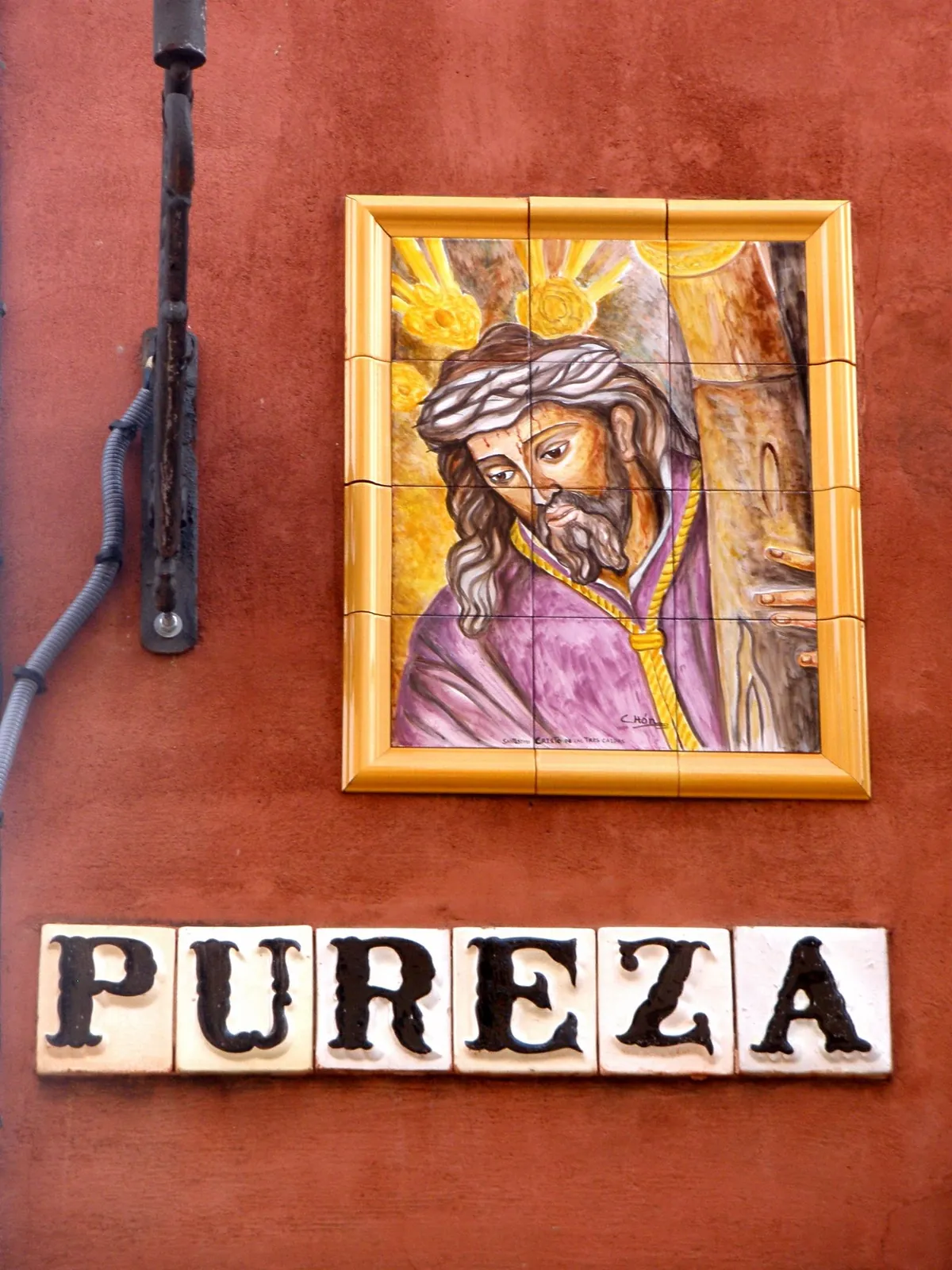
The theatre gives its address as Calle Pureza 76, 41010 Seville, and describes two terraces, one with a view along Calle Pureza and the Giralda on the horizon, and a larger one facing the tower of the Church of Santa Ana. Its site calls the Calle Pureza terrace an intimate place for a pause before or after the show. Type the address into a map app and the street will lead you in.
The Church of Santa Ana
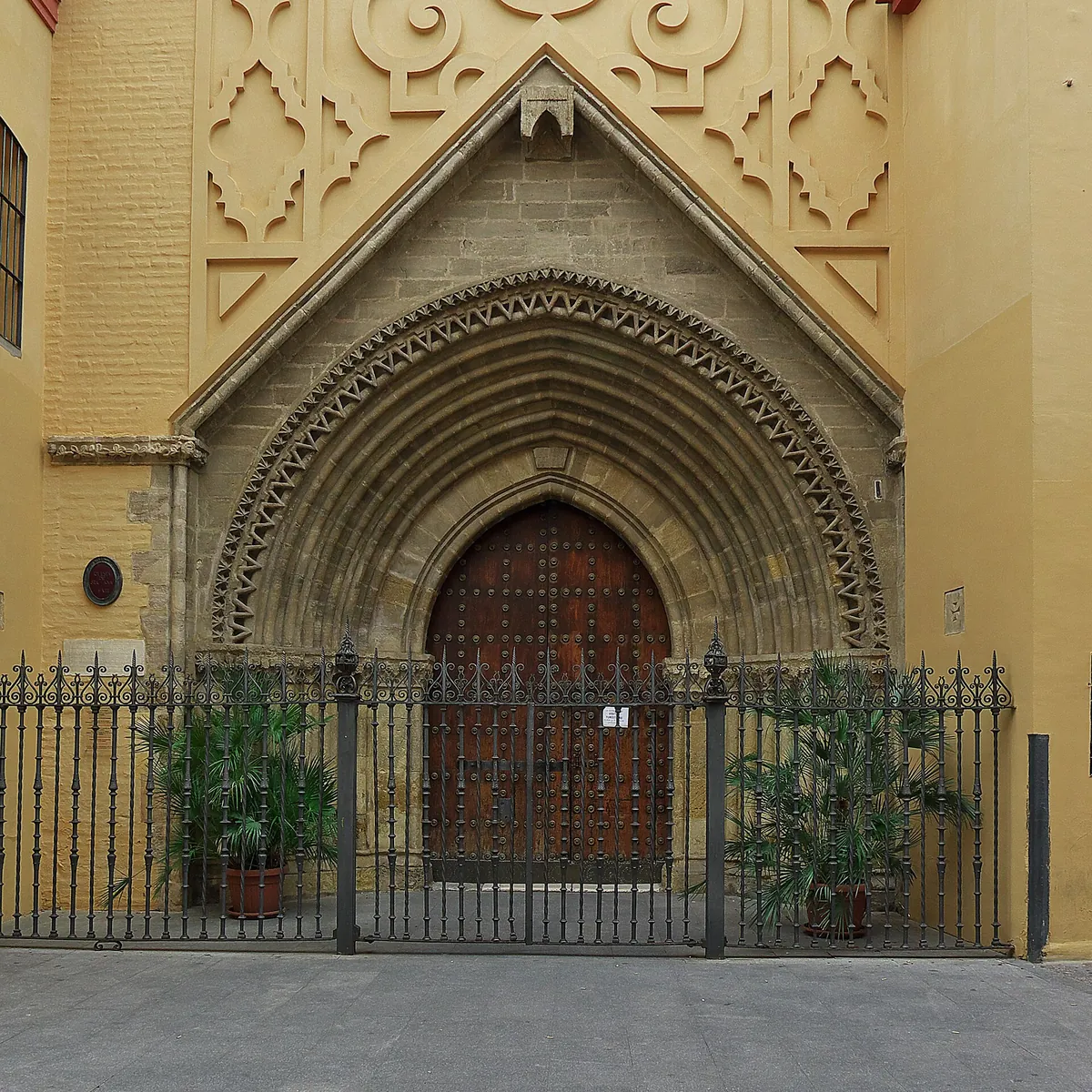
Wikipedia says local sentiment treats the Church of Santa Ana as Triana's cathedral, and that it was the first Catholic church raised in Seville once Muslim rule ended in 1248. Its architecture combines early Gothic and Mudéjar styles, it was built by order of Alfonso X, and it has an altarpiece painted by Pedro de Campaña. Wikipedia adds that residents took refuge in it during the district's floods. The theatre's larger terrace faces its tower.
The Sailors' Chapel and the House of Columns
Also on Calle Pureza, Wikipedia names the Capilla de los Marineros, the Sailors' Chapel, seat of the brotherhood known as La Esperanza de Triana, and the Casa de las Columnas, the House of Columns, formerly home to the Universidad de Mareantes, an institution founded to train seamen bound for the Americas in the 16th and 17th centuries. Both are on the street you walk to reach the theatre.
Calle Betis and the river
Calle Betis follows the waterfront, with a wide view across to central Seville and, Wikipedia says, many of the city's best-liked restaurants, bars and clubs. It is the natural place to eat around a show, because the theatre allows no eating or drinking in the room. In late July it becomes the setting for the Velá de Santa Ana, the neighbourhood's festival.
The Triana market
Wikipedia says the Triana market, built in 2005 in the Moorish Revival style, stands on the southern side of the bridge, and that the foundations of the Castillo de San Jorge can be seen in its basement, now home to exhibits on the history of the Inquisition. Wikipedia also describes a busy market area near the bridge, with food stalls and small restaurants offering tapas, and handmade local crafts. The theatre's site lists public parking at the market, as well as at Plaza de Cuba.
Getting there and back
The theatre's site lists taxi ranks at Plaza de Cuba and Plaza del Altozano, a metro stop at Plaza de Cuba, and public car parks at Plaza de Cuba and the Triana market. It also lists city bus stops nearby. Check current routes in a transport app on the day, because services change, and leave time to take your seat, since guests are asked not to leave once the show begins.
Frequently asked questions
What is the address?
Calle Pureza 76, 41010 Seville, according to the theatre's own pages.
Where can I park?
The theatre's site lists public car parks at Plaza de Cuba and by the Triana market.
Where is a taxi rank?
The theatre's site lists ranks at Plaza de Cuba and Plaza del Altozano.
What is the Altozano?
A square at the Triana end of the bridge, with monuments to the bullfighter Juan Belmonte and to the flamenco arts.
Sources